
Impacts of radio-frequency electromagnetic field (RF-EMF)
Impacts of Radio-Frequency Electromagnetic Fields from Cell Phone Towers and Wireless Devices on Biological Systems and Ecosystems
The rapid expansion of wireless communication technologies has significantly increased human exposure to radio-frequency electromagnetic fields (RF-EMF) generated by mobile phones, cellular towers, Wi-Fi networks and other wireless devices. Although these technologies have transformed modern communication, their increasing presence in residential, urban and natural environments has raised questions about their potential biological and ecological consequences. In their 2012 review published in Biology and Medicine, S. Sivani and D. Sudarsanam examined available scientific literature on the possible effects of RF-EMF exposure on living organisms, including humans, plants, insects, birds and mammals. Their review highlighted several reported biological changes, including alterations in neurotransmitter activity, blood-brain barrier permeability, cellular metabolism, calcium transport, electrophysiological activity and gene and protein expression. However, the authors also emphasized that the long-term biological significance of these observations remained unclear and that further investigations were needed to establish reliable exposure thresholds and understand potential environmental consequences.
Understanding Radio-Frequency Electromagnetic Fields and Their Biological Effects
Radio-frequency electromagnetic fields are part of the non-ionizing portion of the electromagnetic spectrum and include frequencies commonly used in telecommunications. According to the review, RF-EMF covers a frequency range of approximately 10 MHz to 300 GHz, while mobile communication technologies operate mainly between 800 MHz and 3 GHz. Cellular antennas, Wi-Fi systems and other wireless devices generate electromagnetic fields that can interact with biological tissues. Unlike ionizing radiation, such as X-rays and gamma rays, radio-frequency radiation does not carry sufficient energy per photon to directly ionize atoms or molecules. Nevertheless, exposure conditions, including frequency, intensity and duration, are important parameters when investigating possible biological interactions. Two principal measurements are used to characterize exposure: power density, expressed in watts per square metre (W/m²), and the specific absorption rate (SAR), expressed in watts per kilogram (W/kg), which measures the rate at which electromagnetic energy is absorbed by biological tissue. The amount of energy absorbed depends on several factors, including the distance from the radiation source, transmission power, frequency and the size, shape and composition of the exposed organism.
The review also discusses the distinction between thermal and non-thermal biological effects. Thermal effects result from energy absorption that produces tissue heating, whereas non-thermal effects refer to reported biological responses that are not explained by measurable temperature increases. Proposed mechanisms investigated in experimental research include oxidative stress, changes in cellular signalling, alterations in enzyme activity and modifications in gene expression. The authors explain that existing exposure standards, including those adopted from the International Commission on Non-Ionizing Radiation Protection (ICNIRP), were primarily designed to protect against established adverse effects associated with excessive heating. The extent to which prolonged, low-intensity exposure may produce other biological effects remained an important research question at the time of publication.
Effects of Electromagnetic Fields on Plants and Natural Ecosystems
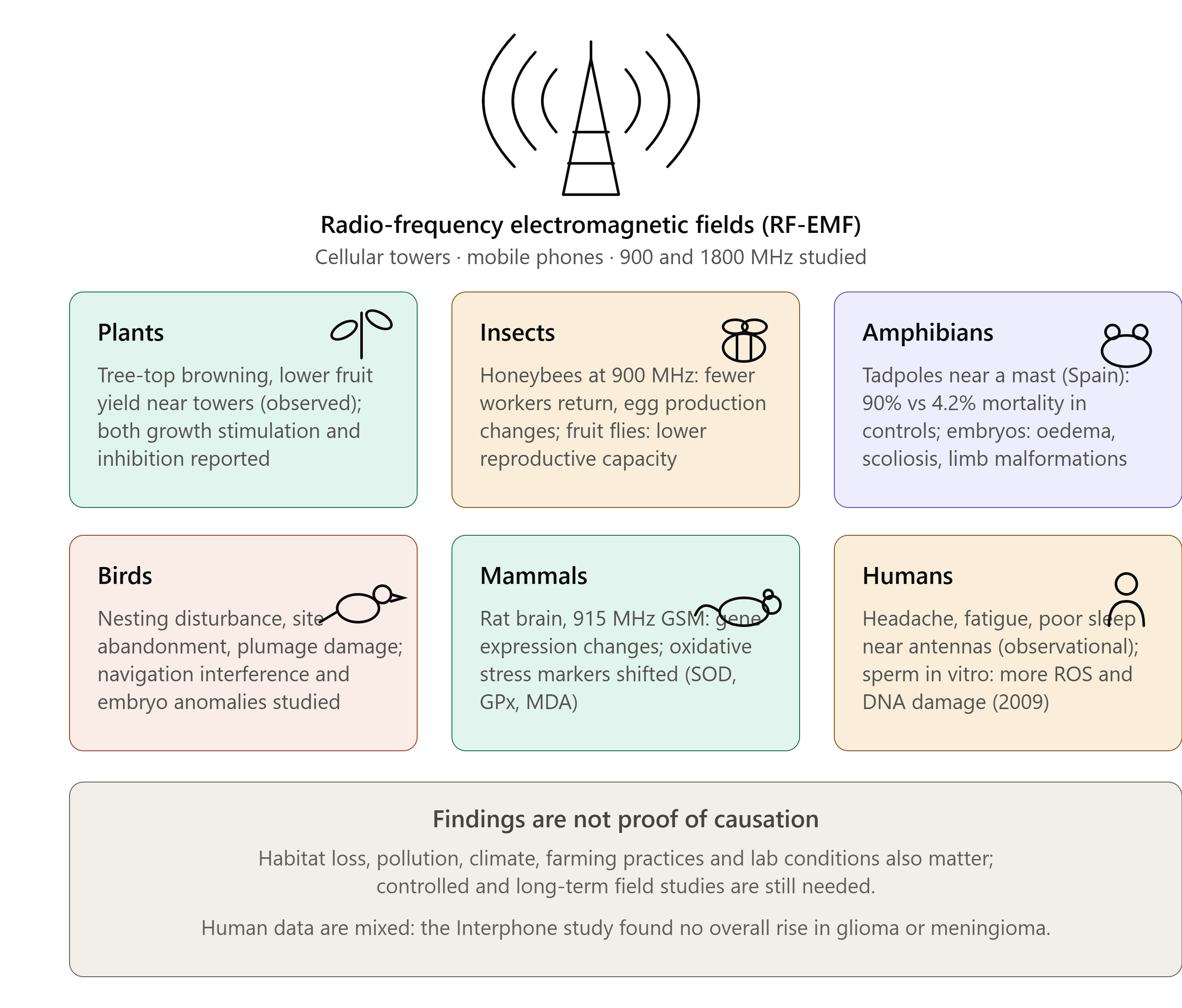
Plants are essential components of ecosystems, supporting biodiversity, maintaining soil stability and contributing to atmospheric regulation. The review describes observational studies suggesting that exposure to electromagnetic fields may be associated with changes in plant growth, development and general appearance. Some investigations reported browning or drying of tree tops located near cellular antennas, as well as possible reductions in fruit production and increased susceptibility to environmental stress. One observational study conducted in the Gurgaon–Delhi region reported a substantial reduction in fruit production approximately two and a half years after the installation of cellular towers near a farm. However, these observations do not establish that electromagnetic exposure was the direct cause, as environmental conditions and other agricultural factors may also influence plant health. Other investigations have reported both growth stimulation and growth inhibition, illustrating the variability of experimental findings and the need for controlled studies.

Effects on Insects: Honeybees, Navigation and Reproductive Activity
Insects play a fundamental role in maintaining ecological balance, particularly through pollination, reproduction and the regulation of natural food chains. Honeybees, butterflies, ants and other insects use environmental signals to navigate, locate food sources and return to their colonies. The review discusses studies investigating whether artificial electromagnetic fields may interfere with these biological processes. In particular, experiments involving honeybees exposed to 900 MHz radiation reported changes in colony behaviour, navigation and reproductive activity. Some observations included reduced numbers of worker bees returning to their hives, changes in egg production and the appearance of unusual worker piping behaviour following exposure to electromagnetic fields. Other investigations using digital cordless phones and mobile handsets also reported behavioural changes in exposed bee colonies. Research involving Drosophila melanogaster, commonly known as the fruit fly, similarly reported reductions in reproductive capacity following exposure to 900 MHz and 1800 MHz signals. These experiments investigated possible cellular damage, DNA fragmentation and degeneration of egg chambers as potential mechanisms. Nevertheless, the findings from individual experiments should not be interpreted as definitive proof that telecommunications infrastructure causes colony collapse disorder in natural bee populations.
Effects on Amphibians and Reptiles
Amphibians are particularly important indicators of environmental health because their development and survival are closely influenced by water quality, temperature and habitat conditions. The review highlights experimental investigations examining the effects of electromagnetic exposure on frogs, toads and other amphibians. Some studies reported changes in tadpole development, movement coordination, growth synchronisation and survival following exposure to electromagnetic fields. In one investigation conducted in Spain, common frog tadpoles exposed near a mobile phone mast located approximately 140 metres away showed developmental differences and a reported mortality rate of 90%, compared with 4.2% in the unexposed control group. Other experiments involving amphibian embryos reported developmental abnormalities, including oedema, scoliosis, microcephaly and limb malformations. Although these findings raised questions about the potential sensitivity of amphibians to environmental electromagnetic exposure, differences in experimental conditions and the limited availability of long-term field studies make it difficult to extrapolate these results to natural populations.
Effects on Birds: Reproduction, Behaviour and Navigation
Birds depend on several environmental signals for migration, orientation, reproduction and communication. Their ability to navigate over long distances is particularly important for migratory species, and research has investigated the role of magnetite-containing tissues in magnetic field perception. According to the review, some observational and experimental studies reported behavioural and reproductive changes in birds exposed to electromagnetic fields emitted by communication towers. Investigations involving house sparrows, white storks, rock doves and other species described possible nesting disturbances, site abandonment, plumage deterioration and difficulties with locomotion. Other studies examined the effects of microwave exposure on bird embryos and reported developmental abnormalities under laboratory conditions. Researchers have also investigated whether electromagnetic fields could interfere with the biological mechanisms involved in bird navigation. However, the decline of bird populations is influenced by multiple environmental pressures, including habitat destruction, pollution, food availability and climate change, meaning that the contribution of RF-EMF exposure requires further investigation.
Effects on Mammals and Cellular Biological Mechanisms
Experimental research involving mammals has provided additional information about the possible biological interactions of radio-frequency electromagnetic fields. The review describes studies conducted on rats, rabbits, cattle and other animals, investigating cardiovascular activity, neurological function, reproductive parameters and cellular metabolism. Some experiments reported changes in heart rate, alterations in brain neurotransmitters and modifications in the expression of genes involved in cellular regulation. In rat brain tissue, exposure to a 915 MHz GSM signal was associated with changes in the expression of several genes related to neurotransmitter regulation, blood-brain barrier function and melatonin production. Other investigations reported modifications in oxidative stress markers, including changes in superoxide dismutase, glutathione peroxidase and malondialdehyde levels. Studies examining learning and memory in rodents also investigated possible alterations in hippocampal morphology and behavioural performance following exposure. These findings have encouraged further research into oxidative stress, neurochemical signalling and cellular stress responses as potential mechanisms of interaction between electromagnetic fields and biological systems.
Human Health: Neurological, Reproductive and Cellular Effects
The potential effects of RF-EMF exposure on human health have been investigated through epidemiological studies, laboratory experiments and clinical observations. The review discusses possible interactions with the nervous, circulatory, reproductive and endocrine systems, with particular attention to prolonged exposure to mobile phones and cellular base stations. Some observational studies reported associations between proximity to cellular antennas and symptoms such as headaches, fatigue, sleep disturbances, dizziness, irritability and difficulties concentrating. Other investigations examined whether mobile phone exposure could influence oxidative stress, DNA integrity and cellular stress responses. For example, an experimental study published in 2009 by De Iuliis and colleagues reported increased reactive oxygen species production and DNA damage in human spermatozoa exposed to radio-frequency radiation in vitro, alongside changes in sperm motility and vitality. Research has also investigated the expression of heat shock proteins, particularly HSP27 and HSP70, which are involved in cellular responses to stress. However, these laboratory findings do not independently establish that everyday exposure to wireless devices causes infertility, cancer or neurological disease in humans. Epidemiological evidence has also remained complex, with studies such as the international Interphone investigation reporting no overall increase in glioma or meningioma risk, although some findings raised questions about the highest exposure categories.
Electromagnetic Hypersensitivity and Reported Health Symptoms
Electromagnetic hypersensitivity (EHS), also described in some literature as electromagnetic field intolerance, refers to a condition in which individuals attribute symptoms such as headaches, nausea, fatigue, muscle pain and sleep disturbances to exposure to electromagnetic fields. The review discusses investigations in Sweden and other European countries that examined the experiences of individuals reporting sensitivity to wireless devices, mobile phone towers and electrical infrastructure. Some researchers also investigated biological markers, including histamine concentrations, heat shock proteins, melatonin levels and indicators associated with blood-brain barrier function. Although these observations have contributed to research into the condition, electromagnetic hypersensitivity remains a complex subject, and scientific evidence has not established a consistent causal relationship between electromagnetic field exposure and the reported symptoms. Further controlled investigations are needed to understand the mechanisms involved and identify appropriate ways to support affected individuals.

Future Research and Environmental Protection Strategies
The growing use of wireless communication technologies makes it increasingly important to understand their potential long-term interactions with biological systems. The review emphasizes several research priorities, including controlled exposure experiments, more accurate dosimetry, molecular and cellular investigations, and long-term epidemiological studies involving different age groups and animal populations. Particular attention was recommended for early-life and prenatal exposure, neurological development, reproductive health and environmental biodiversity. The authors also discussed precautionary approaches, such as appropriate cellular tower placement, antenna orientation and exposure monitoring in densely populated areas. These measures were presented as potential ways to reduce unnecessary exposure while allowing society to benefit from modern wireless technologies. Ultimately, understanding the relationship between electromagnetic fields, biological responses and environmental conditions requires multidisciplinary research combining molecular biology, toxicology, ecology, epidemiology and electromagnetic engineering.
Conclusion
The review by Sivani and Sudarsanam highlights the growing scientific interest in the potential biological and ecological effects of radio-frequency electromagnetic fields generated by mobile phone towers and wireless devices. By examining research involving plants, insects, amphibians, birds, mammals and humans, the authors identified several reported changes in cellular activity, neurological function, reproductive processes and animal behaviour. However, the evidence available in 2012 was heterogeneous, and many of the reported effects required further investigation before reliable conclusions could be established. The authors particularly emphasized the lack of long-term environmental data in India and the need for more comprehensive research into prolonged exposure. As wireless technologies continue to expand, scientifically sound exposure assessments and well-designed biological studies remain essential for understanding potential risks, protecting ecosystems and ensuring the responsible development of communication infrastructure.
Additional scientific study: Genotoxicity Investigation of ELF Magnetic Fields in Salmonella typhimurium Using the VITOTOX Test
A separate experimental investigation published in Bioelectromagnetics in 2011 examined whether extremely low-frequency magnetic fields could induce genotoxic effects in Salmonella typhimurium. Unlike the RF-EMF review above, this study focused on extremely low-frequency (ELF) magnetic fields at 50 Hz and their potential interactions with chemical mutagens. The researchers used the sensitive SOS-based VITOTOX test to investigate DNA damage and mutagenic responses in bacterial cells exposed to magnetic fields alone or in combination with three established chemical mutagens: 4-nitroquinoline-1-oxide (4-NQO), bleomycin and benzopyrene. The experiments involved magnetic flux densities of 100 and 500 µT, with continuous exposure periods of one or two hours. The bacterial strains used in the investigation included Salmonella typhimurium TA-104-recN2-4, which produces a detectable light signal when DNA damage activates the SOS response, and TA104-pr1, which served as an internal control for luminescence measurements. Light emission was monitored at five-minute intervals over a four-hour period to evaluate potential genotoxic responses.
The results showed that exposure to the investigated extremely low-frequency magnetic fields did not induce SOS response-based mutagenicity in Salmonella typhimurium. Furthermore, the researchers did not observe a synergistic genotoxic effect when magnetic field exposure was combined with the tested chemical mutagens. These findings indicate that, under the specific experimental conditions used, the investigated magnetic fields did not produce detectable genotoxic activity in this bacterial test system. The study therefore provides an important complementary perspective on electromagnetic field research by demonstrating that biological responses depend on the type of electromagnetic exposure, its frequency and intensity, the experimental model and the biological endpoint being investigated.

Reference: Verschaeve L, Anthonissen R, Grudniewska M, Wudarski J, Gevaert L, Maes A. (2011). Genotoxicity investigation of ELF-magnetic fields in Salmonella typhimurium with the sensitive SOS-based VITOTOX test. Bioelectromagnetics, 32(7), 580–584. DOI: 10.1002/bem.20672.