C-19 : Viral Transport Medium (VTM) for diagnosis
Viral Transport Medium (VTM) – With or Without Swab
1. Product Overview
Viral Transport Medium (VTM) is a specialized liquid medium developed for the collection, preservation, and transportation of clinical specimens containing or suspected of containing viral agents. It is designed to help maintain the quality and integrity of biological specimens between the time of collection and their arrival at the laboratory for further examination.
The reliability of infectious disease diagnosis depends on several factors, including the quality of the original specimen, the collection technique, the transport conditions, and the time elapsed before laboratory processing. Inadequate specimen handling may compromise the material required for downstream analysis and affect the quality of diagnostic investigations. The use of an appropriate transport medium is therefore an important step in laboratory sample management.
During the COVID-19 outbreak, the collection and transportation of specimens for the detection of SARS-CoV-2 highlighted the importance of standardized specimen handling procedures. Viral Transport Medium provides a suitable solution for transferring collected specimens from healthcare facilities, collection centers, and other sampling locations to diagnostic laboratories.

Formulated in accordance with WHO and CDC recommendations, this product is available with or without a swab, offering flexibility for different specimen collection procedures and laboratory requirements.
2. Principle and Function of Viral Transport Medium
Viral Transport Medium is intended to provide a protective environment for biological specimens during transportation. Its formulation combines a balanced salt solution with protein components and antimicrobial agents to support specimen preservation and help limit contamination during handling.
The liquid medium serves as a transportation environment for collected material, helping maintain the specimen until it can be processed using an appropriate laboratory method. This is particularly important when samples cannot be analyzed immediately after collection and must be transferred between different facilities.
The inclusion of proteins such as serum components helps provide a stabilizing environment for biological material. At the same time, antibiotics and antifungal agents help control the growth of contaminating microorganisms that may be introduced during specimen collection or handling.
VTM is consequently used as part of specimen management workflows involving viral diagnostic testing, molecular biology procedures, and selected research applications.
3. Main Applications and Laboratory Uses
Viral Transport Medium is suitable for the collection and transportation of specimens intended for different laboratory investigations. Its formulation supports the handling of samples containing viruses, Chlamydia, and Mycoplasma, depending on the intended application and the compatibility of the subsequent analytical method.
3.1 Molecular Biology and Nucleic Acid Detection
One of the major applications of Viral Transport Medium is the transportation of specimens intended for molecular biology analysis. Following collection, samples may be transferred to laboratories for nucleic acid extraction and subsequent detection using validated molecular techniques.
These procedures are particularly relevant to infectious disease investigations, where the identification of specific genetic material is required. Proper specimen collection and transportation help ensure that the material received by the laboratory is suitable for the intended analytical workflow.
3.2 Infectious Disease Diagnostic Testing
VTM is used in specimen collection and transportation workflows for laboratory investigations of viral infections. It provides a practical solution for transferring collected samples from the point of collection to diagnostic facilities while maintaining appropriate specimen-handling conditions.
Its use is especially relevant in organized testing programs and laboratory networks where specimens must be collected at multiple locations and transported to centralized facilities for processing.
3.3 Conventional Cell Culture and Research Applications
Viral Transport Medium can also be used for specimens intended for conventional cell culture methods and selected virological research applications. The formulation is designed to support specimen preservation during transportation before laboratory procedures are performed.
The suitability of a specimen for cell culture depends on the organism being investigated, the collection method, storage conditions, and the laboratory protocol. Appropriate procedures should therefore be followed according to the intended application.
3.4 Transportation of Specimens Containing Other Microorganisms
In addition to viruses, the medium is described for the transportation of specimens containing Chlamydia and Mycoplasma. These microorganisms are relevant to different diagnostic and research settings and may require specific collection and processing procedures.

The intended analytical method should always be considered when selecting a transport medium, particularly when different types of microbiological investigations are requested from the same collection site.
4. Composition and Formulation
Our Viral Transport Medium is formulated using Hanks' Balanced Salt Solution (HBSS) supplemented with calcium and magnesium. This balanced solution provides the liquid base of the formulation and is combined with additional components intended to support specimen preservation and reduce microbial contamination.
The formulation contains three principal supplementary components:
4.1 Hanks' Balanced Salt Solution (HBSS)
Hanks' Balanced Salt Solution is a balanced salt formulation commonly used in biological and cell-based laboratory applications. In this product, HBSS provides the liquid foundation of the transport medium and contains calcium and magnesium.
These components contribute to the composition of the solution and help provide an appropriate environment for biological specimen handling during transportation.
4.2 Heat-Inactivated Fetal Bovine Serum
Heat-inactivated Fetal Bovine Serum (FBS) is incorporated as a protein supplement. Serum proteins are commonly used in biological formulations because they can contribute to the stabilization and protection of biological material.
Within the transport medium, this component forms part of the protein-based environment intended to support specimen preservation before laboratory processing.
4.3 Gentamicin
Gentamicin is an antibiotic included in the formulation to help suppress bacterial contamination. During specimen collection and transportation, unwanted microorganisms may be introduced from the collection environment or handling process.
The presence of an antibiotic helps limit the growth of susceptible contaminating bacteria during the transportation period.
4.4 Amphotericin B
Amphotericin B is an antifungal agent incorporated to help control fungal contamination. Together with gentamicin, it contributes to the antimicrobial protection of the transport medium.
The combination of these antimicrobial components is intended to reduce the proliferation of contaminating bacteria and fungi that could interfere with subsequent laboratory investigations.
5. Importance of Antimicrobial Agents in Specimen Transportation
Clinical specimens may contain the microorganism being investigated alongside other microorganisms originating from the collection site or surrounding environment. If these contaminants multiply during transportation, they may complicate specimen processing and laboratory interpretation.
For this reason, commercially prepared viral transport media commonly contain antibiotics and antifungal agents. These substances help control unwanted microbial growth and contribute to the preservation of specimens during transfer to the laboratory.
However, the presence of antimicrobial agents must be considered when planning additional microbiological investigations. If bacterial or fungal cultures are also requested, separate specimens should be collected using appropriate collection materials and procedures.
This distinction is important because antimicrobial agents incorporated into the transport medium may interfere with the recovery and cultivation of bacteria or fungi.
6. Product Design and Available Presentations
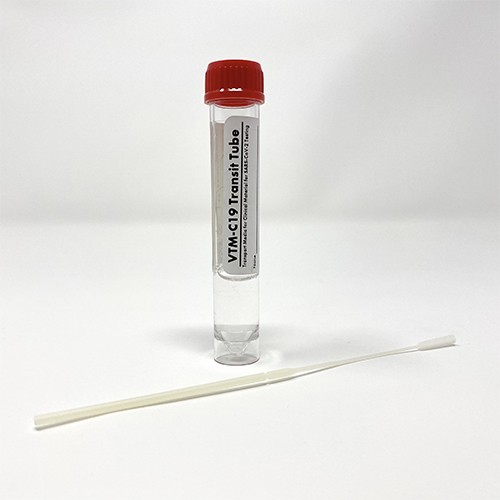
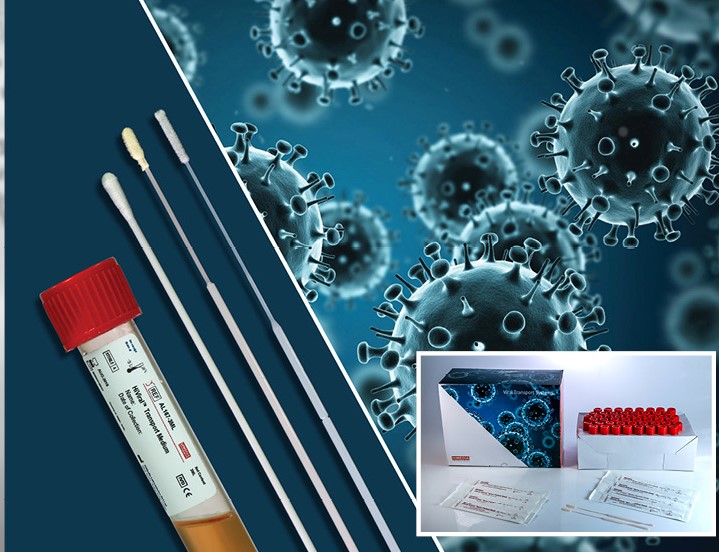
The Viral Transport Medium is supplied as a sterile liquid in a 13 ml flat-bottom plastic tube. Its presentation is designed to facilitate specimen collection, identification, handling, and transportation within laboratory and healthcare environments.
To accommodate different collection procedures, the product is available in two formats:
6.1 Viral Transport Medium Without Swab
The version without a swab provides the transport medium in a sterile tube for users who already have compatible specimen collection devices.
This format offers flexibility for laboratories and healthcare facilities that use their own standardized swabs or collection systems. It can be integrated into existing specimen collection workflows, subject to compatibility with the intended specimen type and laboratory procedure.
6.2 Viral Transport Medium With Swab
The version supplied with a swab combines the transport tube and collection accessory in one product presentation. This configuration provides a convenient option for facilities that require both components for specimen collection and transportation.
By providing the swab together with the transport medium, this format simplifies the preparation of collection materials and facilitates the organization of specimen collection activities.

7. Product Specifications
| Parameter | Description |
|---|---|
| Product name | Viral Transport Medium (VTM) |
| Main application | Collection and transportation of biological specimens |
| Formulation | Hanks' Balanced Salt Solution (HBSS) |
| Additional components | Calcium, magnesium, heat-inactivated FBS, gentamicin and amphotericin B |
| Physical form | Liquid |
| Container | Sterile flat-bottom plastic tube |
| Tube capacity | 13 ml |
| Medium volume per vial | 3 ml |
| Available formats | With or without swab |
| Manufacturing formulation | Based on WHO and CDC recommendations |
| Intended use | In vitro diagnostic use |
8. Available Product Formats and Packaging
The product is available in two packaging configurations, allowing laboratories and healthcare facilities to select the presentation that best matches their specimen collection requirements.
| Description | Product Code | Packaging |
|---|---|---|
| Viral Transport Medium without swab | VTMK-49-3ML | 49 vials of 3 ml |
| Viral Transport Medium with swabs | VTMK-49-3ML | 49 vials of 3 ml + 49 swabs |
Both presentations contain the same transport medium formulation. The main difference concerns the inclusion or absence of collection swabs in the packaging.
9. Specimen Collection, Handling and Transportation
The quality of a specimen can be influenced by the conditions under which it is collected, handled, and transported. Appropriate collection procedures are therefore essential to ensure that the sample remains suitable for its intended laboratory application.
Viral Transport Medium should be used according to the manufacturer's operating instructions and the laboratory's validated specimen collection procedures. Healthcare professionals and laboratory personnel should follow the applicable biosafety recommendations throughout the collection and transportation process.
Particular attention should be given to specimen identification, proper tube closure, prevention of leakage, and compliance with the recommended storage and transportation conditions. These precautions contribute to the safe management of biological specimens and help reduce the risk of sample contamination or deterioration.
The transport medium should not be considered a substitute for correct specimen collection or laboratory quality-control procedures. Its role is to support specimen transportation as part of a complete diagnostic workflow.
10. Quality, Safety and Laboratory Considerations
Viral Transport Medium is intended for professional use in laboratory and healthcare environments. Its formulation and manufacturing process follow WHO and CDC recommendations, providing a product designed for specimen transportation applications.
As with other biological specimen collection products, appropriate handling practices must be observed. Personnel should use suitable personal protective equipment and follow institutional biosafety procedures when collecting, handling, or transporting potentially infectious material.
The operating instructions should be consulted before use to verify the appropriate procedures for specimen collection, storage, and transportation. The selection of the product should also take into account the specimen type and the requirements of the intended diagnostic or research method.
Important notice: This product is a medical device for in vitro diagnostic use. Read the operating instructions carefully before use. Follow the manufacturer's instructions and applicable biosafety and specimen transportation requirements.